
Connecting the public to licensed rehabbers & vets
Georgia Wildlife Network hotline is CLOSED! We will re-open in early 2027.
If you need wildlife assistance, you can also use the app Animal Help Now or visit AHNow.org to find a licensed wildlife rehabilitator near you. You may also contact the Georgia DNR Ranger Hotline at 1-800-241-4113.
Check the “Species Info” section for guidance, or download the free Animal Help Now app to locate a licensed rehabber near you. You can also use the Facebook group “Georgia Wildlife Connect”
If you reach out for assistance, please be prepared to safely contain and transport the animal if needed.
🚫 Do NOT give food, water, or milk.
And a reminder, we are a volunteer-run 501(c)(3) nonprofit organization.
Thank you for working with us to help Georgia’s wildlife. 🐾
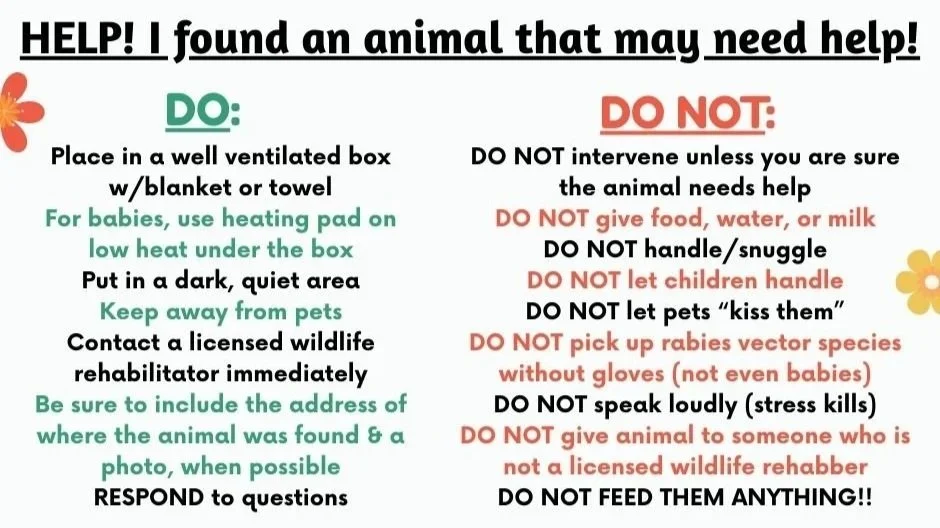
Do you need help with injured or orphaned wildlife?
If yes, READ THIS:
If you believe you have found orphaned wildlife, please consult with an expert before handling the animal. Each year, many healthy babies are unintentionally taken from their parents by well-meaning individuals. In most cases, a young animal’s best chance of survival is with its mother, and reunification will always be recommended whenever it is safe and appropriate to do so. Please avoid intervening unless you are certain the animal truly needs help. (See the “Species Info” and “Wildlife Facts” tabs for additional guidance.)
If you encounter wildlife with obvious injuries and the animal is unable to walk, fly, or flee, it likely requires assistance. In these situations, we may advise you to safely contain the animal until it can be transported. Exceptions include adult deer and rabies vector species.
Any animal that has been in the mouth of a cat must be seen by a licensed rehabilitator immediately, even if no puncture wounds are visible. Cat saliva contains bacteria that are highly toxic to wildlife, and antibiotic treatment is essential for survival.
If containment is necessary, a well-ventilated box is recommended for most species. Line the bottom with a sheet, blanket, or shredded paper to provide traction. Avoid towels when possible, as claws can become caught and cause injury.
For your safety, never approach wildlife that is acting abnormally (such as staggering or walking in circles) or showing signs of illness (such as excessive drooling or nasal discharge). Always wear thick gloves if handling is necessary, and only do so when it is safe and appropriate.
Rabies vector species (such as raccoons, foxes, bats, and others) should never be handled directly. If an RVS species is injured or in distress, contact a licensed rehabilitator or appropriate authorities for assistance.
Do not offer food, milk, or water unless specifically instructed to do so by a licensed rehabilitator. Online advice should not be relied upon in place of professional guidance.
It is illegal in the state of Georgia to rehabilitate or care for wildlife without the proper licensing. Always ensure that any individual receiving wildlife is a permitted professional.
While transporting wildlife, keep the animal in a dark, quiet, and secure space away from people and pets. Even calm-appearing animals may be in shock, and stress can be life-threatening. Wildlife may also carry parasites or zoonotic diseases, so contact should be kept to an absolute minimum. Begin seeking professional help immediately rather than delaying care.
For species-specific guidance, refer to the “SPECIES INFO” tab. A list of frequently used rehabilitators, along with contact information and species they are licensed to care for, can be found under the “Rehabbers” section. Additional resources are also available through the free Animal Help Now app (AHNOW.org) and the Georgia DNR licensed rehabilitator directory.
For severely injured deer, sick raccoons, or assistance with birds of prey, contact the Georgia DNR Ranger Hotline at 800-241-4113
If you have followed the above steps and still need assistance, you may text Georgia Wildlife Network at 678-8ASKGWN (678-827-5496) with a photo, your location, and details of the situation. Please note that Georgia Wildlife Network is a 501(c)(3) nonprofit operated entirely by volunteers, and we respond to a high volume of cases, especially during peak season. Transport assistance is dependent on volunteer availability in your area at the time of need. Whenever possible, we encourage direct transport to a licensed rehabilitator, as rehabilitators do not provide pickup services due to the demands of caring for multiple animals in their care.

Below are just a few of the rehabbers we partner with. Always call ahead and ask if they can intake before transporting to their location.






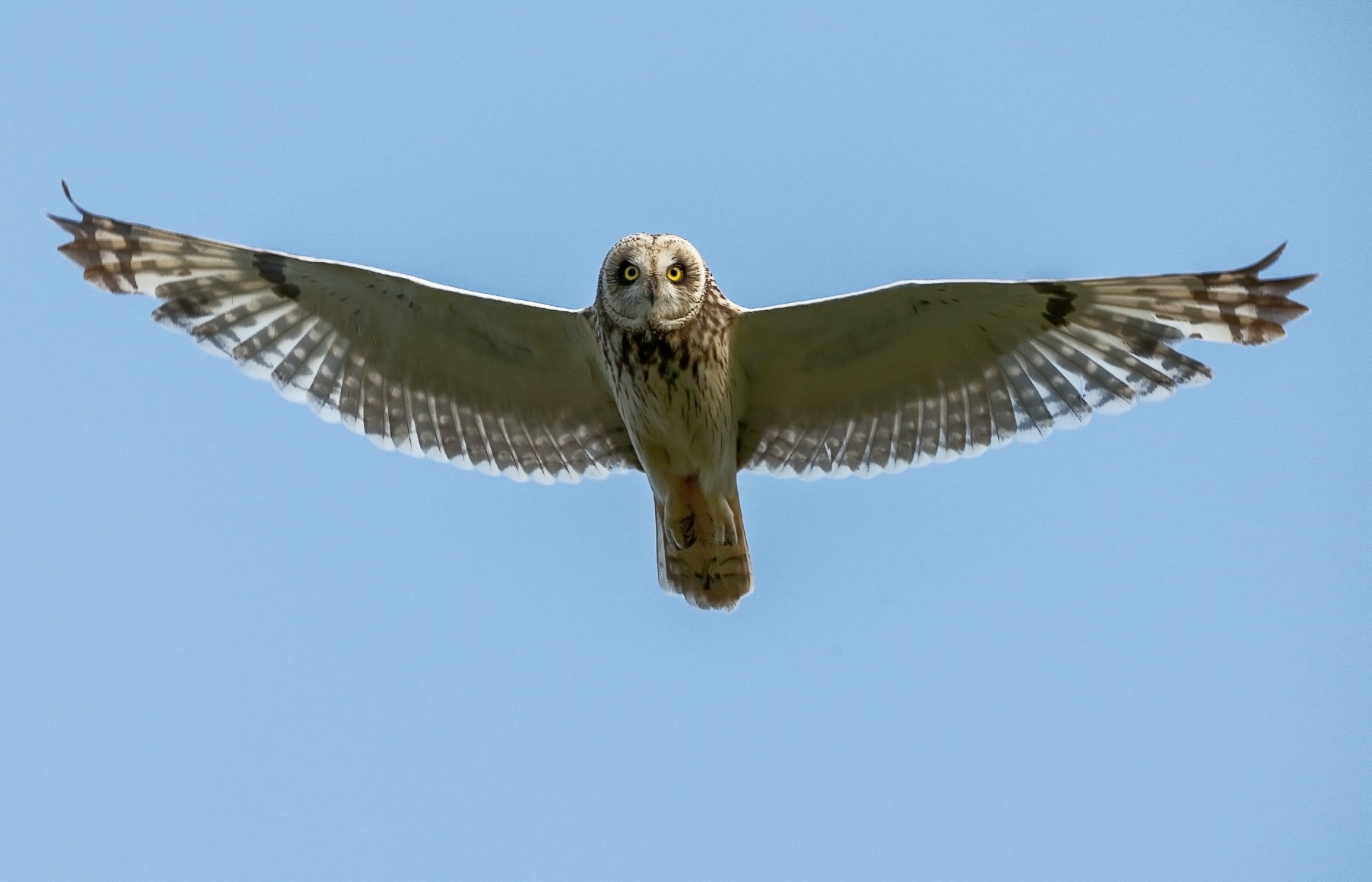
“Shout out to Georgia Wildlife Network for coming to rescue a red-tail hawk in our neighborhood today. Our friends noticed it in their front yard and saw that it couldn’t fly. They kept an eye on it until GWN could come out and safely catch it. It’s being evaluated at a vet now. Fingers crossed for a happy outcome!”
— Bird Watcher Supply Company
Contact Us
Hours
Sun 9am-6pm Mon-Sat 9am-8pm
HOURS MAY VARY BASED ON VOLUNTEER AVAILABILITY
Help@GeorgiaWildlifeNetwork.com
Executive Director: Heather Thomas
Assistant Director: Tiffany Greene
Manager: Gillian van Wyk
Contact
TEXT us at 678-8ASKGWN
678-827-5496
Location
Servicing the state of Georgia